
SafeSpot
SafeSpot is a free, 24/7, peer-led overdose detection and prevention hotline that is staffed by a dedicated team of people with lived and living experience with overdose and drug use. The number one risk factor for fatal overdose is using alone. SafeSpot can be there for you when others cannot be by connecting you with a trained operator who can call for help in case of overdose.
How does it work?
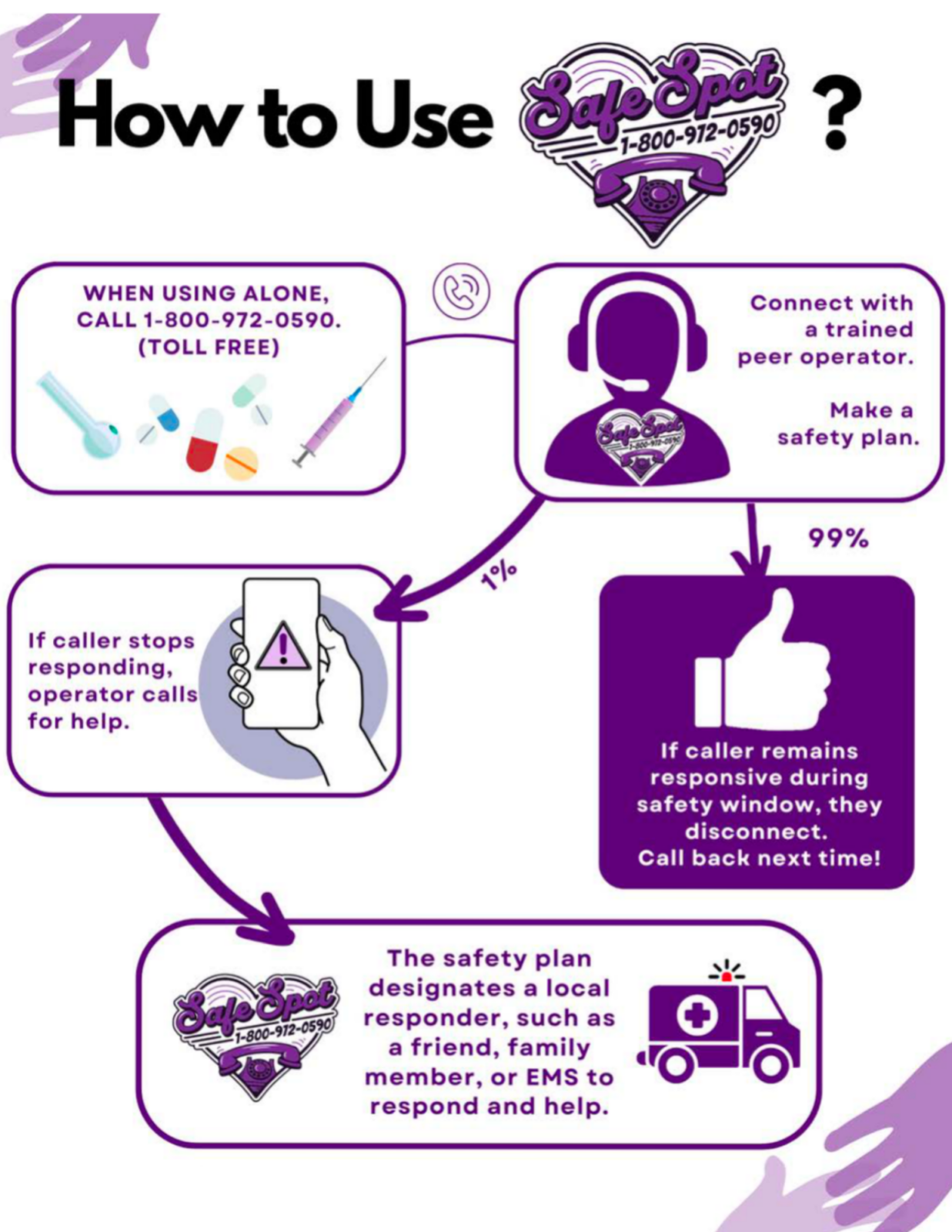
Well, they hang out on the phone with people while they use drugs. If an emergency arises, they activate help based on the safety plan YOU create. Your safety plan can include notifying a personal contact or emergency services. The operators do this by asking you for your exact location before you use, but your address is only collected by the operator in case of emergency and is never stored in any database.
Visit the SafeSpot website
You can learn more about SafeSpot by visiting their website, or by calling their phone number to do an informational call!
What is a Safety Plan
A Safety Plan is a tool that SafeSpot will use with you at the beginning of a call. It is designed to help you prepare for a safer substance use experience before connecting with a SafeSpot operator. The plan guides you through important information such as:
- Your location
- Substances being used
- Route of use
- Naloxone availability
- Emergency contacts
- And other safety considerations that may be needed if an emergency occurs.
By completing a Safety Plan ahead of time you can let SafeSpot know exactly who you want them to contact if you become unresponsive. This can be 911 or a friend, family member or someone nearby. It’s up to you!
What is an Information Call?
SafeSpot offers informational calls for anyone who wants to call the hotline and talk about the service with an operator before they use it. Simply call the hotline number and tell the operator you have some questions!
Call the SafeSpot Hotline
Click the link below to call the SafeSpot hotline number
1-800-972-0590
Frequently Asked SafeSpot Questions
Additional questions about the helpline can be found on the SafeSpot website. You are not alone. SafeSpot is here to support your safety – without judgment, pressure or stigma.
If you are someone who uses alone, this hotline can save your life.
The hotline is available 24/7, with over 20 trained operators ready to take calls at any time.
The average hold time is approximately 30 seconds, though this may vary depending on call volume and time of day.
Calls are initially recorded for quality assurance and in case of emergencies or complaints. Recordings are deleted after 7 days. The Quality Improvement/Quality Assurance (QI/QA) process allows both callers and operators to submit complaints, which are reviewed within that same timeframe. All recordings are promptly deleted afterward to main confidentiality.
To respond effectively in an emergency, SafeSpot asks for some basic information at the start of the call, including:
- Your location
- The substance you’re using
- Your method of use
- Your name (preferably your real name, as hearing it may help revive you)
This information is used to create a Safety Plan. SafeSpot aims to be caller-driven. If you are not comfortable sharing certain details, they respect that – but understand that limited information may affect their ability to get help you as needed.
If you stop responding to verbal prompts for more than 1 minute, the operator will attempt to rouse you by calling your name, raising their voice and using whistles. If there is no response, they will assume a potential overdose and activate your Safety Plan (setup at the beginning of the call).
Operators use a nationwide dispatch number to connect with emergency medical services (EMS) closest to your location.
This is determined by your Safety Plan, created at the start of the call. If you have a trusted person nearby with naloxone (Narcan), the operator can call them first. If that person cannot be reached or is too far away, EMS may still be contacted.
SafeSpot cannot control which emergency responders arrive. Depending on your location, this may include Paramedics, Firefighters or Police officers. Remember you can also designate someone else instead of 911.
In Wisconsin, there is a Good Samaritan Law, but protections are limited. There are no protections for possession of controlled substances or paraphernalia. There are no protections related to probation or extended supervision violations. If a child is present, Child Protective Services (CPS) may be contacted. For safety, callers are encouraged to put away children’s items in a separate, closed space at the beginning of the call.
No. SafeSpot is a non-judgmental, harm reduction service. Operators are there to:
- Hold space and support you
- Help you use more safely
- Provide harm reduction information if requested
- They can offer guidance on:
- Safer use practices
- Accessing Supplies
- Finding additional resources